Are AI and Machine learning the same?
Introduction
Right now, AI is everywhere, and machine learning is often placed into the same conversation. So naturally, people ask: “Are AI and machine learning the same?” The answer is - not really, but they’re closely related.
Think of AI as the “big brain” controlling machines to act smart. Machine learning is one way that the brain actually learns things. From Netflix recommendations to chatbots and even fraud detection, both are working behind the scenes - sometimes together, sometimes separately. And now, with technologies like blockchain, things are getting even more interesting. Let’s break it all down in the simplest way possible.
Are AI and machine learning the same?
No. Artificial Intelligence (AI) and Machine Learning (ML) are not the same, though they are closely related. AI is the broader subject of machines performing intelligent tasks, while ML is a subset that allows systems to learn from data. In simple terms, ML is one of the key ways AI systems improve and evolve.
What is Artificial Intelligence (AI)?
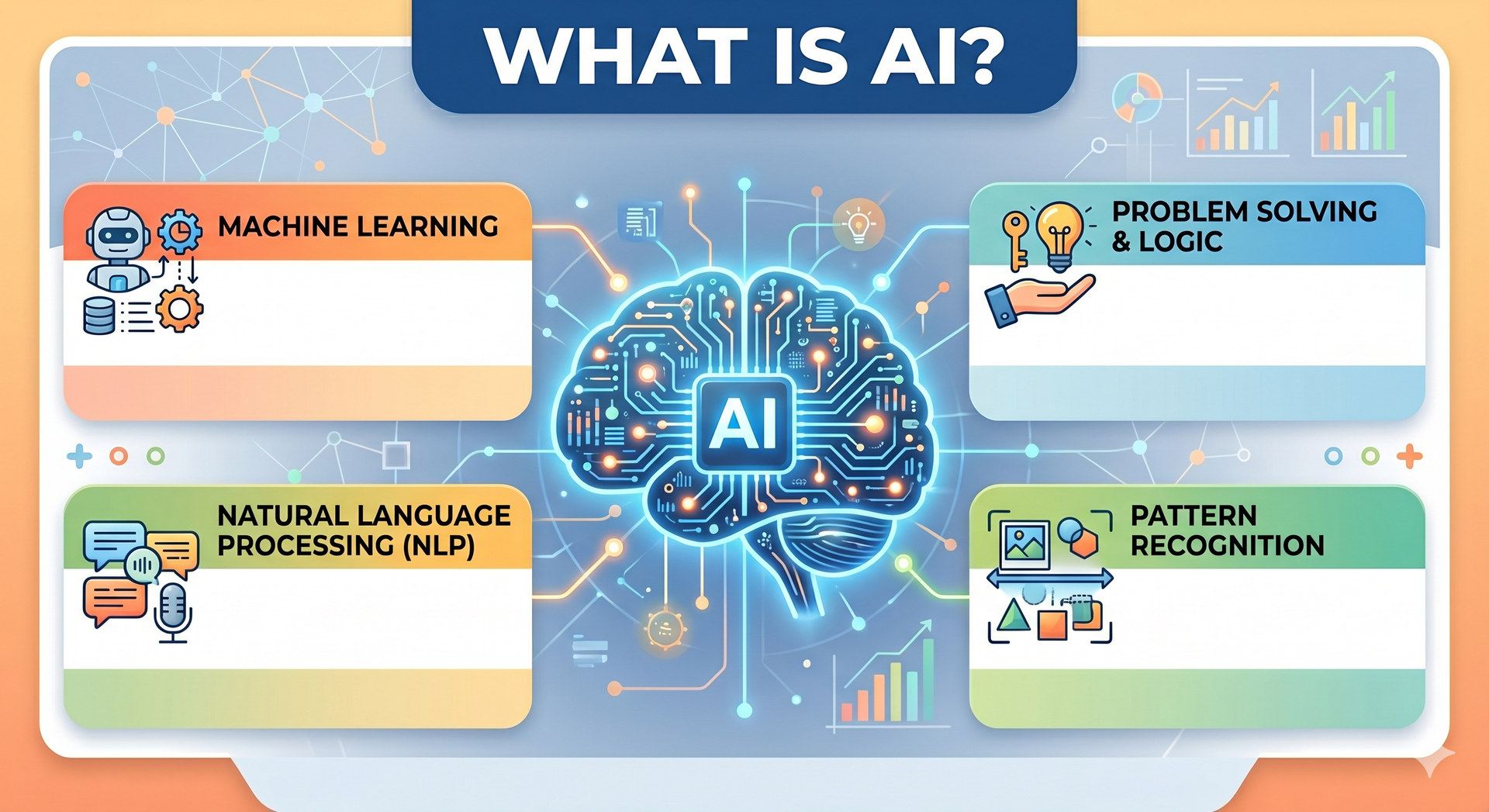
Artificial Intelligence (AI) is the ability of machines to perform tasks that normally require human intelligence, such as thinking, learning, and decision-making. By using algorithms, data, and technologies like neural networks in AI, it solves problems and automates processes. AI powers many everyday applications by improving efficiency and enabling smarter, faster decisions without constant human intervention.
How Does AI Work?
Artificial Intelligence works by collecting data, processing it through algorithms, and making decisions based on patterns. It gives the results based on the trained data and historical patterns. It uses models like neural networks in AI to analyse inputs such as text, images, or voice. Some systems follow predefined rules, while others learn from data using machine learning. Over time, AI improves its accuracy by continuously learning, enabling automation and smarter decision-making in real-world applications like recommendations, chatbots, and fraud detection systems.
Where is AI Used in Real Life?
Chatbots: Answer customer queries instantly
Recommendation systems: Suggest content based on user behaviour
Voice assistants: Understand and respond to voice commands
Self-driving cars: Detect the environment and make driving decisions
- Fraud detection systems: Identify suspicious financial activities
Real Case Studies of AI Usage
AI is transforming industries with practical applications.
Netflix uses recommendation systems powered by neural networks to personalize content and boost engagement.
Amazon applies AI automation systems for product suggestions and demand forecasting.
In healthcare, IBM Watson assists doctors in diagnosis using predictive analytics. Tesla uses AI in self-driving technology to analyze real-time road data.
In finance, PayPal leverages AI to detect fraud by identifying unusual patterns.
What is Machine Learning (ML)?
Machine Learning (ML) is a subset of artificial intelligence in which systems learn from data rather than following fixed rules. Based on the provided data, it identifies patterns, makes decisions, and improves accuracy over time.
How Does Machine Learning Work?
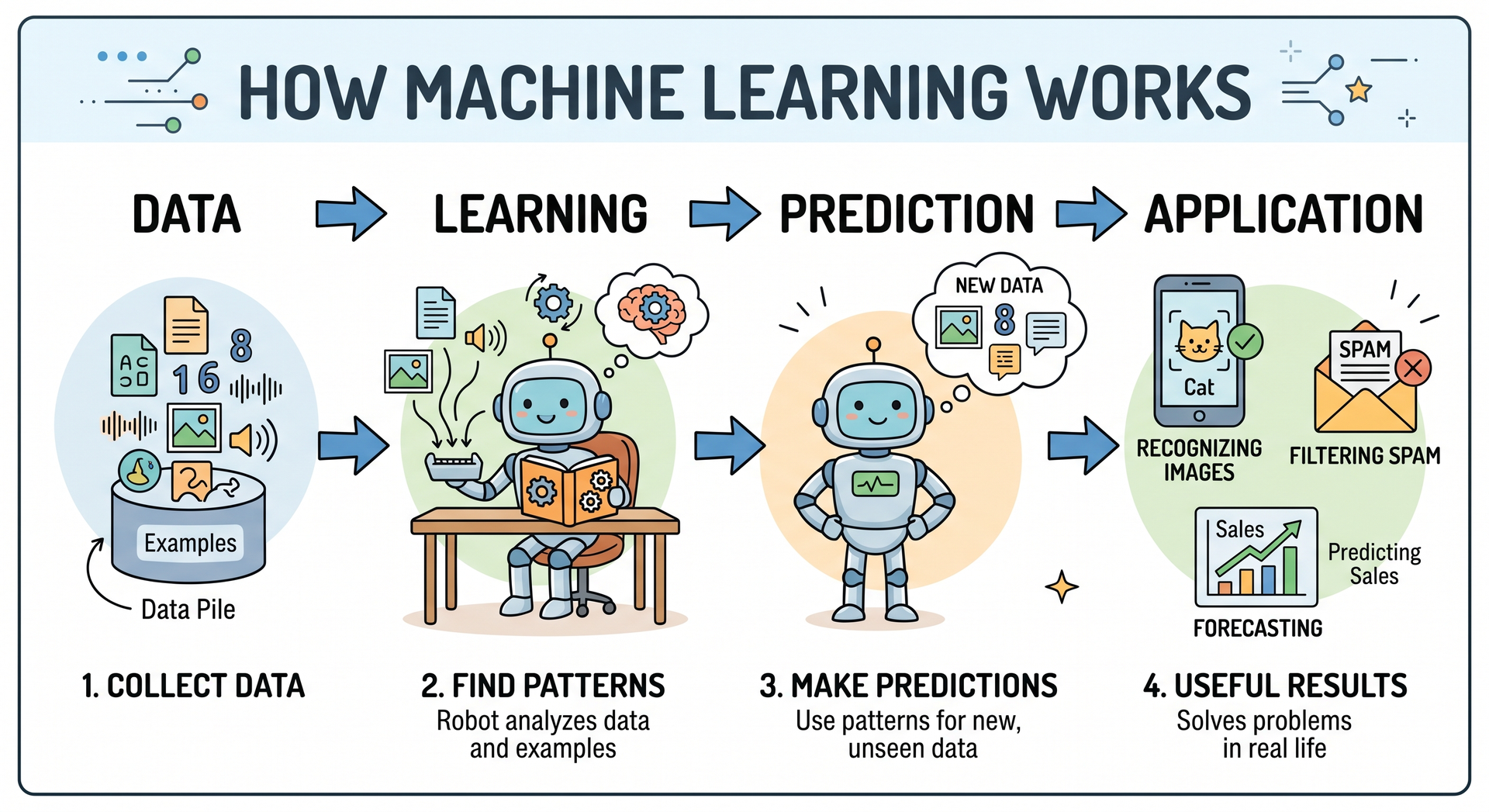
In machine learning, systems learn from data, identify patterns, and make predictions without being explicitly programmed. Data collection is the primary stage of the process, and the models are trained with these data. These models, often built using a neural network, analyze patterns and relationships within the data. Once trained, the system can make predictions on new data. With continuous input, it improves accuracy over time. Advanced techniques like deep learning use multiple layers to process complex information more efficiently and deliver smarter results.
What is a Neural Network in Machine Learning?
A neural network in machine learning is a computational model inspired by the human brain. It consists of interconnected layers of nodes (neurons) that process data, identify patterns, and learn from examples. It is widely used in tasks like image recognition, speech processing, and predictive analytics.
Where is Machine Learning Used in Real Life?
Recommendation systems: Netflix and Amazon suggest content/products based on user behaviour
Spam detection: Email platforms filter unwanted messages automatically
Voice assistants: Alexa and Google Assistant learn and respond to voice commands
Fraud detection: Banks detect suspicious transactions in real time
Social media feeds: Platforms personalise content using user interaction data
Search engines: Google ranks results based on relevance and user intent
Healthcare: Predictive analytics helps in disease detection and diagnosis
E-commerce: Dynamic pricing and product recommendations improve sales
Insurance benefits: It reduces the paperwork and automates the underwriting process.
Real Case Studies of Machine Learning
Netflix uses machine learning in recommendation systems to analyze user behavior and suggest personalized content, increasing watch time and engagement
Amazon applies machine learning to predict customer preferences, optimize product recommendations, and improve inventory management
Google uses machine learning in search algorithms and voice recognition to deliver accurate results and enhance user experience
What is the difference between AI and Machine Learning?
Yes, there are some differences between AI and Machine Learning
AI is the bigger concept of machines acting intelligently. Where, Machine learning is a subset that allows machines to learn from data.
Understanding the artificial intelligence machine learning difference is key to avoiding confusion. While AI focuses on simulating human intelligence through rules, logic, or learning, ML specifically relies on data to improve performance. The difference between artificial intelligence and machine learning becomes clearer when you see that AI can work without learning, but ML always depends on data-driven learning.
Difference Between AI and ML with Examples
Feature | Artificial Intelligence (AI) | Machine Learning (ML) | Example |
Definition | Broad concept of machines performing intelligent tasks | Subset of AI that learns from data | AI: Rule-based chatbot vs ML: Learning chatbot |
Goal | Simulate human intelligence | Learn patterns and make predictions | AI: Virtual assistant vs ML: Recommendation engine |
Approach | Rule-based + learning-based | Purely data-driven | AI: Expert system vs ML: Spam filter |
Dependency | Can work without ML | Always depends on AI | AI: Pre-programmed system vs ML: Self-learning model |
Learning Ability | May or may not learn | Continuously learns from data | AI: Static chatbot vs ML: Netflix recommendations |
What is Blockchain?
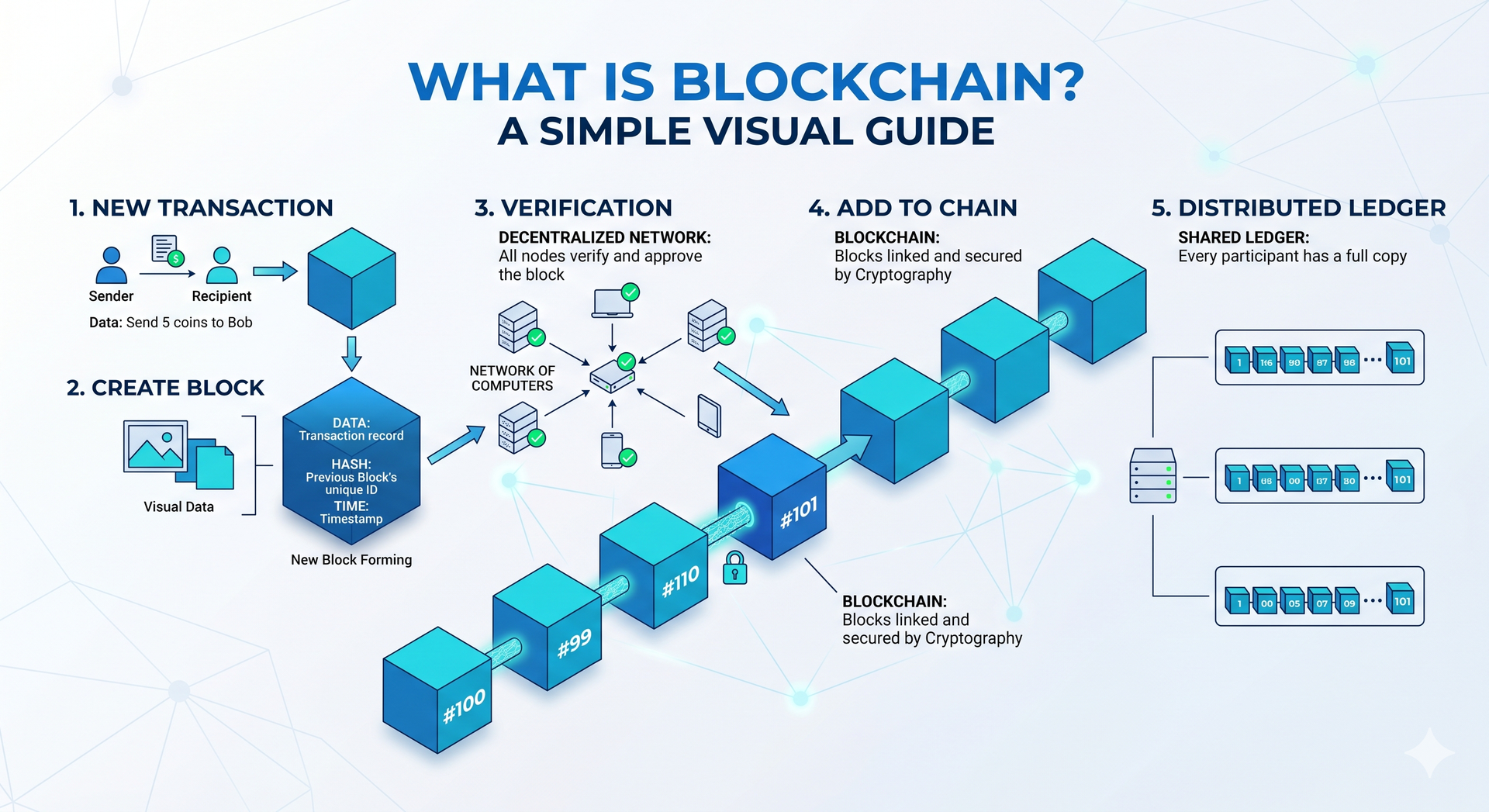
Blockchain is a decentralized system that stores data across multiple computers in a secure and transparent way. Instead of relying on a central authority, it ensures trust through cryptographic validation and distributed networks. Once data is recorded in blocks and linked in a chain, it becomes nearly impossible to alter or manipulate, making blockchain highly reliable for secure transactions and data management.
What is the Connection Between AI and Blockchain?
The connection between artificial intelligence and blockchain is very interesting, as they complement each other. AI relies heavily on data to make decisions, while blockchain ensures that this data is secure, transparent, and trustworthy. Together, they create systems that are both intelligent and reliable, reducing risks like data manipulation and improving overall efficiency in real-world applications.
Why AI Needs Blockchain?
Blockchain ensures data security by protecting AI training data from tampering
It builds trust by providing verified and transparent data sources
How Blockchain Enhances AI?
Blockchain improves transparency by making AI decisions traceable
It enables decentralisation, reducing dependence on a single authority
Real-Life Examples: Integration of AI, ML, and Blockchain
AI, ML, and blockchain are working together in many industries.
In healthcare, AI analyzes patient data, ML predicts diseases, and blockchain keeps records secure.
In finance, machine learning and blockchain can be integrated where ML detects fraud, AI automates decisions, and blockchain ensures safe transactions.
In supply chains, AI forecasts demand, ML improves logistics, and blockchain tracks products transparently.
Even in digital marketing, AI personalizes ads, ML studies user behavior, and blockchain protects user data.
This integration of artificial intelligence and blockchain creates systems that are smart, secure, and trustworthy, making everyday processes faster, safer, and more efficient.
Conclusion
AI and machine learning are closely related but not the same. AI is the broader concept of machines performing intelligent tasks, while ML is a subset that helps systems learn from data. Understanding the difference between artificial intelligence and machine learning is essential for clarity. When combined with blockchain, these technologies become even more powerful. The integration of artificial intelligence and blockchain ensures secure, transparent, and reliable data for smarter decisions. Together, AI, ML, and blockchain are shaping the future by creating systems that are intelligent, trustworthy, and efficient across industries.
FAQs
What is the difference between AI and machine learning?
AI is the broader ecosystem of machines performing intelligent tasks.
Machine learning is a subset of AI that learns from data to make predictions.
In simple terms, this explains the difference between artificial intelligence and machine learning—AI is the broader goal, ML is one way to achieve it
Is ChatGPT AI or ML?
ChatGPT is an integration of both AI and ML.
It is an AI system that uses machine learning (specifically deep learning) to understand and generate text. It learns from large datasets to improve responses over time.
Can ML work without AI?
No, machine learning cannot exist without AI. It is a part of AI and depends on it. However, AI can work without ML using rule-based systems.
Are machine learning and deep learning different?
Yes, they are different but related to each other. Deep learning is a subset of machine learning. It uses advanced models like neural networks to handle complex tasks in an automated and intelligent way such as image and speech recognition.
What is the connection between AI, machine learning and blockchain?
AI uses data to make decisions, machine learning helps it learn from that data, and blockchain ensures the data is secure. This shows how artificial intelligence and blockchain work together with ML to create smart and trustworthy systems.
What is deep learning?
Deep learning is a type of machine learning that uses multi-layered neural networks. It helps systems process complex data like images, audio, and text.